Home of Wasabi Air Racing

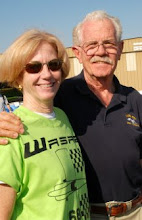
Elliot Seguin and Jenn Whaley's Formula One class air race team based out of Mojave, California. Pylon racing at the National Championship Air Races in Reno Nevada. Eight airplanes racing head to head around telephone poles in the desert. Mojave is the best place on the planet to build and modify a race plane, and Wasabi is lucky to have the best support in the business.

Showing posts with label Lancair Legacy. Show all posts

Wednesday, December 9, 2015

First Flight Report N348LC By Elliot Seguin


We took off as a flight of two from Mojave at 8:00.  Justin used the opportunity to practice a pickup with the GT operating as a surrogate.  It took 15" MAP and 2500 RPM on the GT for the Tango to hang with the GT, both burning about 11.5 GPH.  We arrived at Apple Valley at 8:45.  There were three airplanes in the pattern including a taildragger without a radio.

We worked until 11:30 checking the airframe and engine compartment.  There were some concerns with the inboard aileron hinges pulling off the surface, and similarly with the rudder trim tab (bellcrank moving relative to the surface).  The result was that there was some play in the rudder tab, that play was on the order of what we found in the elevator.  We found that the aileron trim tab was operating backwards, Hadlich fixed that.  Right before lunch we were looking at the parking brake and found it to be engaged, so Elliot turned it off and we went to lunch.  Lunch took about 30 minutes at the airport restaurant. 

After Lunch when we got back to the hangar we found a puddle of brake fluid under the airplane and an associated brake fluid trail on the right side of the pilot's foot well.  Tracing the leak Justin found it was the parking brake that was leaking.  Justin worked the problem first confirming the brake lines were tight, they were.  So Justin checked that the brake housing was tight, it was.  He finally removed the parking brake and replaced it with a AN3 male to male fitting.  We bled the left brake and found both left and right brakes to be tight.  We installed the cowlings and performed an engine run and taxi test.  The brakes functioned fine during the taxi test.  During the engine run I check the mags and cycled the prop all functioned as expected.  Peak CHT 330F, and peak oil 150F, oil pressure was stable at 55 PSI.  Number 5 cylinder CHT was not funcitonal.  We left to fly back to Mojave at 2:45, arriving in Mojave at 3:30, done for the day at 4:15.

Sunday started with a 6:30 show at Mojave airport, we packed the airplane and launched at 7:00 for a 7:45 arrival at Apple valley.  We briefed at 8:10 and stepped at 8:30.  During the engine start I used high boost to prime and cranked, the engine popped twice and then died, I didn't release the starter and then selected high boost.  After another 6 or 8 blades the engine caught and ran fine.  Initial oil pressure 55 PSI.  During the taxi out we did radio checks, there were some issues with the ground comm, that I think were mostly a miscommunication about what frequency the test team was on.  In order to improve line of sight issues that may have been the cause of the radio problems Justin launched in the Tango and was therefore able to help with the comms.  Engine run up went well, with very small (<50 drops="" fuel="" mag="" pressure="">27 PSI, oil pressure 40 PSi (which is at the bottom limit).  Through the whole morning the traffic on the airport was steadily increasing.  An interesting go-no go item of how much traffic is too much traffic for this kind of testing.

I took the runway while Justin was on initial.  He called 30 seconds and 10 seconds, then an airplane made a relatively long call about being 10 miles south of the field.  Justin called brake release right at the end of this transmission.  I applied full power and released the brakes, my first priority was to confirm with more RPM the oil pressure got further into the green.  Once I saw 45 PSI, I checked that the airspeed was functioning, I saw 40 KIAS.  I then checked the engine RPM and fuel pressures.  By the time I looked back at the airspeed I saw 60 KIAS, and I added back pressure to check pitch handling,  With back pressure the airplane came up on to the mains I held it there until 85 KIAS when the airplane naturally rose off the ground.  I selected gear up and turned to offset to the left 15 degrees.  As I turned left there was a significant engine sound change, I decided this was related to the pneumatic canopy seal. 

I accelerated to 120 for climb speed and looked left noticing the left fuel cap was venting a lot, then the gear finished transit and the pump turned off.  I started a right hand turn, Justin called "clean and dry" and I noticed a "Warm smell" in the cockpit.  I called the smell and venting fuel cap over the radio.  As I crossed over the center of the field I had reached my 180 degree dirty turn altitude of 4500' MSL.  I switched from the right tank to the left tank to try to limit the fuel venting.  Justin called that based on the traffic to the south that we keep the climb going.  So I reduced to climb power (WOT and 2500 RPM) holding 120 KIAS through 7000' MSL.  During that climb I leaned the mixture (initially flowing >32GPH at 25" MAP and all EGTs below the scale, CHTs in the 300s), I leaned to the mid 1300s which took two or three turns.  As I climbed from 7K' to 8K' I accelerated to VA.  At 8K and 170 I reduced power to hold altitude.  Based on Justin's suggestion I did three axis stick wraps at 170 KIAS with no airframe response.  The ailerons seemed softer than Race 44, but I hardly ever fly 44 at VA.

With 15 degrees of roll in a left hand orbit at 8,000 feet and partial power.  Just asked for a situation report on the engine.  I checked as such and the #6 cylinder was up to 418 degrees, so I added a full turn of mixture.  The CHT responded and cooled quickly.  Oil temp was 220f but Oil Pressure was down to 35.  With a minimum oil pressure of 40 PSI this was below the limit.  As a result we called the flight.  I slowed to 140 and extended the gear (which clears the gear envelope).  I slowed to 110 KIAS and extended the flaps to the stop, no roll asymmetry resulted.  I then retracted the flaps and the gear to give us more options as we waited for traffic at the airport to clear.

I arrived at high-key at 140 and 5,500, and extended the flaps to 10 degrees.  The left fuel cap started venting again abou tthis time.  At low key the airplane was low and not far enough downwind.  I was very concerned about the short runway so I decided to extend the downwind.  In order to do that I pull the propeller back to decrease drag and slowed to 110 KIAS.  As I rolled on to base and final I held 110.  I held 110 into the pre flare, as a result during the flare I got below 100 (with ten degrees of flaps) and as a result I was pretty blind (nose was very high).  Luckily Justin was right there with the altitude calls, and the landing went well.  As I was rolling out with the nose up just on the mains I checked the brakes and they were totally flat.  It took two or three pumps to get the brakes to work but they seemed to function normally after that.  I set the nose down with less than 2000 feet remaining and ended up taking the last taxi way.

Looking the airplane over after the flight the main gear oleos had some oil visible on the strut, not suprising but they seemed to be functioning properly.

We went to get food at 9:30.  Elliot and Justin flew back to Mojave and were on deck with the airplanes stowed by 11:30.

Engine Start 8:49
Engine Shutdown: 9:09

Sqwawks:
Fuel Vent Left Side
Oil Pressure Regulator
#6 Cylinder Hot
#5 CHT not functioning
Brakes need to be bled.
Check Oleos


Monday, July 6, 2015

2015 Oshkosh Tent Talk


Reno Wastegate Development
July 24th at 11:30am
Forum Stage 1
Elliot Seguin and Justin Gillen will be giving a tent talk on the engine development work done as part of preparation for the Aerochia/Farnsworth three kilometer closed course and time to climb records set at the 2015 Mojave Experimental Flyin. Specifically the search for the cause of four turbo failures (including one on the course at Reno) and how that added up to the fastest time to climb by a piston powered airplane in the record books.

Monday, February 16, 2015

SETP San Diego


Hey Guys,

There is still time to reserve your spot at the SETP West Coast Symposia (link).

Justin Gillen and I will be speaking about the test work we did fir Aerochia on N62MH, N357AW and N23LF during the build up to Reno 2014.

Justin and I are extremely flattered to have been chosen to speak to this prestigious group and look forward to the opportunity to learn more about testing badass aircraft.

Go work on your airplane!
Elliot and Jenn


Title:  Wastegate Development For A Sport Class Pylon Race Aircraft.

Abstract:  During 2014 Aero Chia performance aircraft changed the pneumatic wastegate provided with their Super Lancair Legacy line of race aircraft.  The TSIO-550-C is rated to 300 horsepower, we believe the engine was making over 650 horsepower when the propeller failed in a heat race at Reno 2014.  The build up to that power setting took place over three airframes, and failed 4 turbos.  These are some of the lessons learned from that testing.


Tuesday, January 13, 2015

2014 Patch offering

Hey Guys, 

Wasabi had a great year of testing, racing, and record setting and we want to share. Send us an envelope and we will send you a patch. If you insist the patches are valued at $5, any donations will be spent on avgas testing airplanes!! While supplies last. If you want a specific patch write which one you are interested in on the envelope, and we will do our best.


PO Box 131
Mojave CA

93502

Thank you,
Elliot


Dragon:  This is the mission patch for N357AW, the most recent Aerochia Super Legacy.  Wasabi was tasked with getting the airplane airworthy and doing the phase one test program.  The names on the top of the patch are the four core members of the team, Andy Chiavetta, Justin Gillen, Elliot Seguin, and Jon Hadlich.  The center of the patch is a dragon.  The dragon was a south pacific style kite that was donated to ward off the gremlins that seemed to be haunting the program.  The patch was designed by Michael Lizama (@BTMichael).


Race 44: This is the mission patch for Lynn Farnworth's race 44 build up and participation at Reno 2014.  The patch is Mowgli (Andy) juggling so many difficult problems.  This program was aggressive before the gremlins started to plague the airplane.  The result was a couple turbo failures (the snails) and Lynn's impressive dead stick during a heat race at Reno.  The names in the center of the patch are the core members of that team Andy Chiavetta, Elliot Seguin, and Justin Gillen. The patch was designed by Michael Lizama (@BTMichael).

Darth Vader:  This is the mission patch for Wasabi's 2014 season.  This was a very busy year for Wasabi, we cut the gear off the airplane, tested an exciting new Catto propeller, increased our gross weight by 20%, and flew non-stop to Oshkosh for the airplane's EAA debut.  The most important was we consistently went faster and finished better than we ever had.  The patch was designed by Michael Lizama (@BTMichael).

Sunrise: This is the mission patch for the Mojave to Oshkosh non-stop formation flight and associated testing and formation practice.  The patch shows a formation of exotic aircraft flying in formation towards the rising sun while other folks are still still catching a few last Zs.  The aircraft on the patch include, Dustin Riggs flying Dick Rutan's Ol' Blue, Doug Dodson flying his Glassair II, Zach Reeder flying the Rutan Catbird, Elliot Seguin flying Wasabi, Justin Gillen flying the Tangotimemachine, and Brandon Cangiano flying Polaire his Lancair Legacy.  
The patch was designed by Whitney Brown, http://whitneyjbrown.com/.

Saturday, December 27, 2014

Super Legacy Test Report


Hey Guys,

Over the last year Jenn, Justin and I have been very fortunate to help Andy Chiavetta of Aerochia Aircraft Performance and Racing with the testing on some of the Super Legacies.  We recently published the report on one of these aircraft, N357AW, on which we did the phase one test program during the summer of 2014.  That report is available here (link), there is a brief and inaccurate summary of my knowledge of Andy's career below.

Airplanes are cool,
Elliot


Andy Chiavetta has built more than 20 airplanes, 8 of which are the Super Legacies that he is most known for, he has also built several hundred skim boards, is part owner in a skim board company (Exile), and has appeared in several skim movies (Exile Bearded).  To me Andy is first a master of composite manufacturing, who's technical skill has consistently put him around some of the smartest people in the business.  The result is that Andy's depth of knowledge, especially with airplanes, extends far beyond the physical building of things with composites.

Andy and Darryl in Race 33, Photo Andy Chiavetta
Andy learned composites building sailboat masts in the LA area.  But the experience that makes me particularly jealous is the work he did with skim boards in the early 90's.  As an engineer in aerospace I spend a lot of time designing and building aircraft structures but little time structurally failing them.  If an engineer is lucky the part that is being designed will be taken to failure once before it is installed on the airplane.  By comparison, when Andy was designing and building skim boards with his friend Aaron Peluso they built and broke hundreds of boards.  The idea of laying up a board, and riding it to failure the next day, seems at once perfectly foreign, perfectly educational, and freaking awesome!  I believe this is a fundamental series of experiences for Andy, and has led to his supreme understanding for composites and how they fail.

Andy Skimming, Photo Matt Adams
With his composite experience and his background in ultralights it was probably only a matter of time before Andy started building composite airplanes especially with the boom in composite kitplanes that was happening in the 90's.  The result, Andy built several kitplanes with customers, which prepared him for the second experience that makes me so jealous of Andy, the moment he met Darryl Greenamyer.  Andy was at a place in his career where he was seeing at once a change in the market, he had been building Wheeler Express' and they were beginning to lose favor, and a plateau in his experience.  He had gotten pretty good at what he was doing and not one to let himself get bored he was looking for the next challenge.  Meanwhile the long awaited Sport Class of Reno Championship Pylon Racing had just gotten on it's feet and Darryl Greenamyer was interested in getting in on the action.  Darryl was asking around to find someone to help him assemble an airplane (Race 33), a perfect combination was born, and four consecutive championships were the result.

Darryl and Andy with Race 33, Photo Andy Chiavetta
The trick in racing is to find a way to sell the technology that you are proving on the race course, making it slightly more financially practical.  Andy was able to turn the modified version of the Lancair Legacy into its own new type of sport aircraft with it's own following, the Super Legacy became the work that kept Andy busy the rest of the year.  Through selling the parts to modify your stock Legacy or doing the actual work of modifying the airplane Andy supplemented the air racing habit that had firmly taken hold.  Eight of these Super Legacies have been built.

Andy and 3 of the Super Legacies, Photo Andy Chiavetta

Lastly Andy's enthusiasm and willingness to push through the problem to a solution with shear will has made him the guy to go to for so many different types of airplane problems.  As a result Andy has worked with and is well respected by the best in the business.  It is fantastic to see good things happen to good natured and hard working people and Andy is one of those.

Andy performs a hasty mid week repair to Strega, Reno 2013

Wednesday, December 3, 2014

Richard VanderMeulen Photo's

Some photos from our shoot with Richard VanderMeulen in the build up to our non-stop flight to Oshkosh.  These were posted on the Kitplanes Facebook page (link).

Thank you Richard!!


Monday, August 18, 2014

Aero Chia work from this weekend

Andy is the jam!

Friday, August 8, 2014

Over the windmills

A big thank you to Richard VanderMeulen and Ben Harvey for this photo over Mojave before our trip to Oshkosh last week.

Front to back, Wasabi, Tango II, Rutan Catbird, Glasair II, Lancair Legacy

Monday, June 30, 2014

A New Legacy


Hey Guys

Jenn, Justin, and I have been having a lot of fun helping out Andy Chiavetta and Jon Hadlich with the flight test work on this new Legacy.  The airplane was built by Austin Willis with a lot of the Aero Chia mods.  It is a total rocket ship!

Justin Gillen chased the first flight.  With ground support by Jenn Whaley, Andy Chaivetta, and Jon Hadlich.

What a great airplane!
Elliot
Jon Hadlich, Andy Chiavetta, Elliot Seguin, Justin Gillen